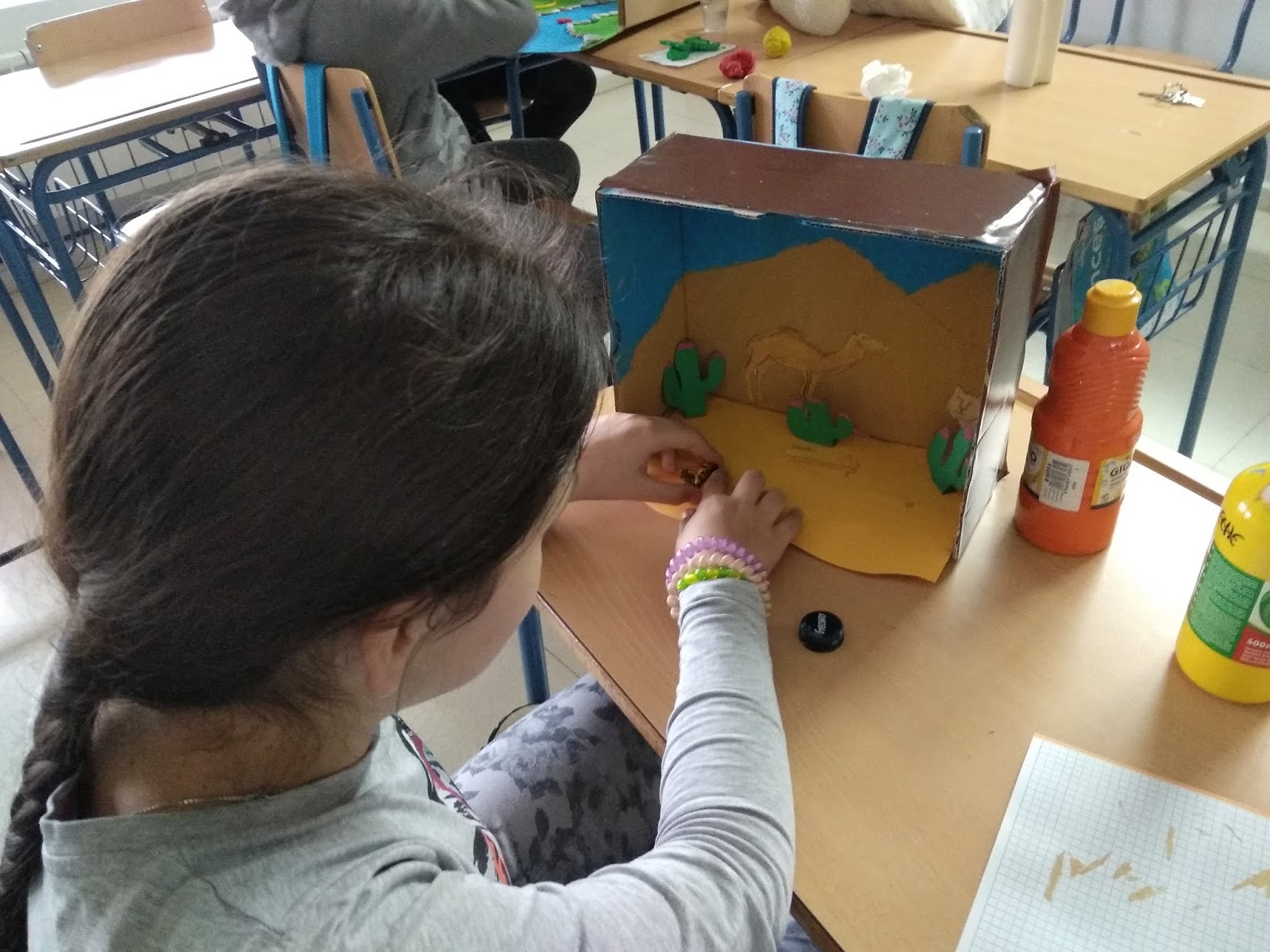
An ecosystem is a community of living organisms in conjunction with the nonliving components of their environment, interacting as a system.
One of the best ways for kids to learn about these key elements of ecosystem is through building their own ecosystem.
They can choose between a terrestrial or an aquatic ecosystem and their model ecosystem must include several biotic and abiotic elements and demonstrate the interactions between the biotic and abiotic elements . They must show food web and they must include producers , primary consumers, secondary consumers , tertiary consumers and decomposers. They must be realistic feeding relationships! Finally, they must explain their projects and evaluate the projects of their classmates.
Un ecosistema es una comunidad de seres vivos e inertes que interactúan en el mismo ambiente. Puede ser muy grande o muy pequeño.
Una de las mejores maneras para que los niños aprendan sobre estos elementos clave del ecosistema es a través de la construcción de su propio ecosistema.
Pueden elegir entre un ecosistema terrestre o acuático y su ecosistema debe incluir varios elementos bióticos y abióticos y demostrar las interacciones entre los elementos bióticos y abióticos.
Deben mostrar una red alimentaria y deben incluir productores, un consumidores primarios, consumidores secundarios, consumidores terciarios y descomponedores. ¡Deben ser relaciones de alimentación realistas!
Al finalizar sus proyectos deberán explicarlos en clase así como evaluar los proyectos de sus compañeros atendiendo a unos items que previamente se les han facilitado.
To celebrate the day of the book, from the subjects included in the bilingual project, we have worked the story called "The tiny seed" by Eric Carl.
First we have told the story and have worked the vocabulary from the English subject.
Then, through the Arts&Crafts subject ,we have decorated the door of our library with an image and a phrase related to the history of "The little seed".
Participated students at all levels.
STORY
LIBRARY DOOR
First, students painted papers with green, yellow, and red paint.
Next, the students prepared the pieces for their collages.
Last step! They pasted the flowers, butterflies, birds, stems, grass ... on
background paper to resemble the scene of The Tiny Seed.
ARTS AND CRAFTS:
VOCABULARY ACTIVITIES
Para
celebrar el día del libro, desde las asignaturas incluidas en el
proyecto bilingüe , hemos trabajado la historia de Eric Carl, titulada "The tiny seed" .
Iniciamos la actividad con un cuenta cuentos y a continuación trabajamos el vocabulario desde el área de Inglés.
Posteriormente,
a través el área de artística hemos realizado manualidades y un póster para decorar
la puerta de nuestra biblioteca con una frase de animación a la lectura
relacionada con la historia de la pequeña semilla "The tiny seed".
En la
decoración han participado los alumnos y alumnas de todos los niveles.
For review the Science subject contents, the students use...
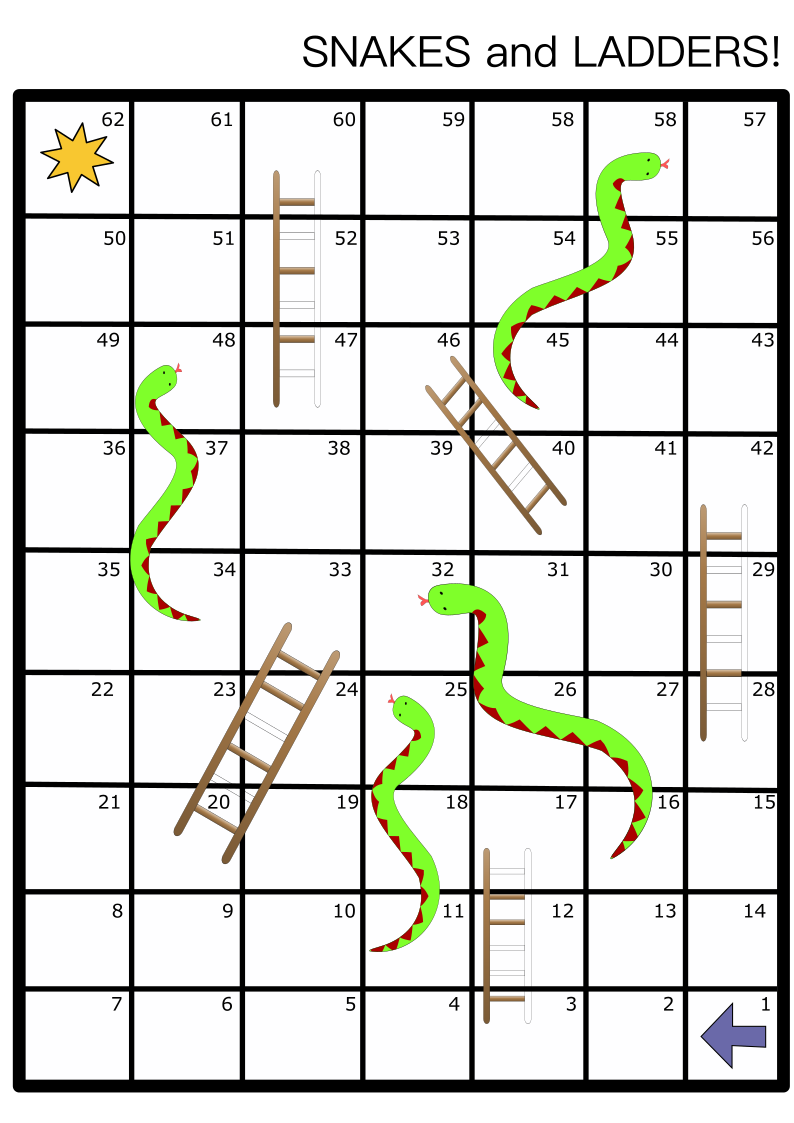
The rules to the “Snakes & Ladders” Game are as follows:
The game is played on a interactive whiteboard (IWB) made up of 62 squares, each numbered.
Each team draws their piece on square 1.
To play, players roll a single die and advance their game piece the rolled number of spaces.
If the team lands on a square at the base of a ladder, they must
correctly answer the associated question in order to climb the ladder to
the higher square.
If the team lands on a snake’s head, they must answer the
associated question in order to stay on that space—otherwise, he or she
will have to “slide” down the snake to the square at the tail-end.
The winning team is the first to arrive at the end of the board—the 62th square.
Para repasar los contenidos de la asignatura de ciencias, los alumnos utilizan el juego de "Serpientes y Escaleras".
Las reglas del juego "Serpientes y Escaleras" son las siguientes:
El juego se juega en una pizarra interactiva (IWB) en la que proyectamos el tablero de juego formado por 62 casillas, cada una de ellas numerada.
Cada equipo (de 2 a 4 jugadores ) elige su color y dibuja su pieza de juego en el cuadro 1.
Para jugar, los jugadores lanzan el dado y avanzan su pieza de juego el número que indica el dado.
Si el equipo cae en un cuadrado en la base de una escalera, debe responder correctamente la pregunta asociada para subir la escalera al cuadrado más alto.
Si un jugador cae sobre la cabeza de una serpiente, debe responder la pregunta asociada para permanecer en ese espacio; de lo contrario, tendrá que "deslizarse" por la serpiente hasta el cuadrado en el extremo de la cola.
Gana el primer equipo que consiga llegar a la casilla final.
World Water Day is an annual observance day (always on 22 March)
that highlights the importance of freshwater. The day is used to
advocate for the sustainable management of freshwater resources.
World Water Day is an opportunity to learn more about water and to recognise the part we can play in saving water.
We have done to celebrate this day has been several activities. First, students have brainstorm all the ways to save water at home , then they had drawn different ways to save it and finally they have explained their poster and have displayed the poster in our Science classroom .
Game: Students made up two small card, one with SAVES and the other WASTES . I said differentes sentences, students listened and held up the card that corresponded to the correct answer.
El Día Mundial del Agua es un día anual establecido por la la ONU (22 de marzo) que destaca la importancia del agua dulce. Este día sirve para abogar por la gestión sostenible de este recurso.
El Día Mundial del Agua es una oportunidad para aprender más sobre el agua y reconocer el papel que podemos desempeñar en el ahorro de la misma.
Los alumnos han realizado diversas actividades
Primero, los alumnos han hecho una lluvia de ideas sobre todas las formas de ahorrar agua en el hogar, luego han elegido una y la han plasmado en papel y finalmente han explicado su propuesta y las han expuesto en clase.
A continuación hemos jugado a un juego que cosiste en elaborar dos tarjetas , en una escriben ahorrar y en la otra malgastar. Se les exponen diferentes acciones cotidianas y ellos deben subir una de las tarjetas dependiendo de si esa acción implica ahorro o malgasto de agua.